


Henry Ballate
Henry Ballate is a New York-based Cuban-American visual artist, curator, art critic, and writer whose work explores identity, memory, migration, and the dialogue between art history and contemporary culture. His artistic and curatorial career spans the Americas, Europe, and Asia. He is the founder of Art-Sôlido, an international art and literary publication, and the Juan Ramón Jiménez Foundation of Coral Gables, dedicated to promoting literature and contemporary poetry.
Ongoing Art Projects
Digital Compositions: From digital conception to painting, canvas, and mixed media.
Photography: Everyday New York moments reimagined through a fine art perspective.


Echoes of Absence: Wandering Through Loneliness in Urban Spaces
Henry Ballate’s Echoes of Absence hums like a quiet note in the chaotic orchestra of the city. A moment to stop. To look. To feel. His work takes you by the hand and leads you through the stillness of streets where life used to be, where voices used to bounce off the walls of buildings like echoes refusing to die. Now, there’s just silence.
Ballate is no stranger to this silence. He has carried his brushes through many exiles, through the heady romance of art history and the gritty reality of life itself. You see it in the way his canvases breathe softly, deliberately. His training, his MFA, the years of exhibitions they’ve shaped him, sure. But what cuts through most is his ability to fold history into now, to make the old masters walk beside him, their works cast in the stark light of our strange, isolating modernity.
And in this series, the masters whisper to us. There’s Leonardo, Caravaggio, Hopper ghosts of art and memory. You know Nighthawks that glowing diner, those lonely figures clutching their coffee cups. Except here, Ballate has stripped them away, leaving only the bones of the scene. The walls, the windows, the fluorescent light spilling out into nothingness. The same with Morning Sun no figure bathed in light, just the architecture, mute and staring.
It’s a strange thing, this absence. You feel it like a weight, like the empty ache in your chest when the streets of New York went quiet during lockdown, when the city stopped mid-breath. Ballate paints that emptiness with a palette as restrained as his spaces greens, yellows, ochers. Colors that ache with nostalgia, like the faded memory of something once warm, now cold. Light flickers here and there, hesitant, like hope doesn’t quite know where it belongs in all this desolation.
But that’s the beauty of it, isn’t it? That little sliver of light cutting through the shadows. It’s a reminder, a whisper, that even in absence, there’s something. A memory, a possibility. Ballate takes you to the edge of that loneliness, makes you sit in it, and then nudges you just a little toward reflection.
These desolate spaces, these humanless scenes, aren’t just about what’s missing. They’re about what remains. The stark geometry of urban architecture, the way shadows stretch long and unbroken without bodies to interrupt them. It’s a kind of poetry sharp-edged and angular, but poetry nonetheless. You start to notice things. The texture of a wall, the way light pools on an empty floor. Without the distractions of life bustling past, you see the city for what it is: a stage waiting for its actors to return.
And yet, the absence isn’t just physical. It’s emotional. Ballate’s work doesn’t let you escape that. It pulls you into your own loneliness, your own memories of what (or who) isn’t here anymore. It’s the friend you didn’t get to see before everything shut down. The lover you lost to time or circumstance. The city, once alive and thrumming, now quiet as a held breath.
Still, there’s hope. That flicker of light, that minimalist palette, that sense of something waiting just beyond the frame. Ballate doesn’t give you answers. He gives you space literal and figurative to sit with your grief, your nostalgia, your hope. His reinterpretations of the old masters don’t just transform their works; they transform you, the viewer.
You might mistake this for mere commentary on the pandemic, but it’s more than that. It’s about memory collective, personal, cultural. When you look at these works, you’re not just seeing New York during lockdown; you’re seeing the echoes of every lonely urban moment you’ve ever lived. And yet, there’s comfort in that. A shared understanding.
Ballate has always had this ability to bridge time, to make history and now hold hands. His references to Da Vinci or De Chirico aren’t just nods to the past; they’re anchors, grounding us in something bigger than ourselves. And in this series, they remind us that art endures, that cities endure, that we endure.
So, as you stand before Echoes of Absence, what do you feel? Nostalgia? Grief? Hope? Probably all three, tangled together like lights and shadows in one of Ballate’s canvases. He leaves you with no easy answers, just the quiet invitation to look closer, to feel deeper.
Because in the end, loneliness is as much a part of the city as its skyscrapers and subway cars. It’s there in the empty diner, the shadowed windows, the hush of streets waiting for the world to wake up again. And Ballate, with his quiet, haunting brilliance, captures it all.

Traces of Silence
Limited Edition Fine Art Photographs by Henry Ballate
“Available Works”
Bring home a moment of silence.
From Traces of Silence, a fine art photography series by New York artist and historian Henry Ballate.
Henry Ballate, Traces of Silence, 2021–2025
Archival museum fine art paper
Limited Edition of 20 + 2 Artist’s Proofs (A.P.)


No one came to see her
(Traces of Silence)
The City was there, breathing softly under its own weight, murmuring through the cracks of light and steam. It wasn’t awake, nor asleep, just suspended, like a memory that refuses to leave. Between the living and the absent, between noise and silence, New York lingered, too alive to be memory, too quiet to be entirely real.
In Henry Ballate’s black-and-white photographs, the streets seem inhabited by whispers. The air holds the weight of stories untold, and light, rather than illuminating, exposes the distance between what was and what remains. The city appears both eternal and exhausted, a vast architecture of absence.
Here, the human figure is never fully present. A passerby drifts through the frame like a half-forgotten thought, a silhouette escaping its own outline. Reflections tremble in windows and puddles; they look back at us like ghosts surprised to be seen. The skyscrapers rise like silent witnesses, temples of concrete and fog, listening to the echoes of footsteps long faded.
Ballate walks through the city as someone who belongs to its silence. He recognizes the flicker of a neon sign, the steam rising from a manhole, the faint reflection of a passerby who may already be gone. His camera doesn’t hunt moments, it waits for them. Each image feels like something overheard, something the city said to itself when no one was watching. And Ballate knows that someone is watching, he knows who.
There’s a sense of circular time in these photographs: every street could be the beginning or the end. The days seem layered, overlapping like memories that refuse to settle. Light seeps through cracks in the present, touching everything with a soft, mournful grace. You can almost hear the hum beneath the noise, a quiet song playing somewhere underground: “Hello darkness, my old friend.”
The absence of color deepens this suspension. Without the distraction of brightness, the city reveals its bones, its veins of light and shadow. What remains is rhythm: the pulse of structure, the geometry of longing. The photographs do not describe New York as we know it; they summon its double, the version that exists behind the visible one.
Every corner feels haunted by someone who just left. Every bench, every window, every puddle seems to remember the weight of those who once stood there. “I came because I was told that life was here,” says a voice in the air, echoing across time, across stories. But what Ballate finds instead is something deeper: a city that remembers itself through those who pass unnoticed.
And then, somewhere, someone is singing from an eternal avenue: “It’s such a perfect day, I’m glad I spent it with you.” The irony and tenderness of that line echo through Ballate’s images, moments that seem perfect precisely because they’re fleeting, anonymous, incomplete.
In Traces of Silence, the metropolis becomes an afterimage of itself, a space where the living and the lost coexist. The City doesn’t speak, it murmurs. It keeps its stories folded inside its walls, waiting for someone to listen. Ballate listens. And through his lens, we too begin to hear what cities whisper when they’re left alone.

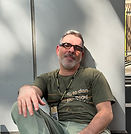
Henry Ballate Biographical Overview
Henry Ballate Biographical OverviewA Visionary in Contemporary ArtHenry Ballate, lives and works in New York City and stands as a distinguished visual artist and curator. His artistic journey began with a solid foundation, as he graduated from the Art Instructors School in Cuba. Henry further honed his skills through international experiences, studying drawing and painting at the Accademia Italiana in Florence, Italy. In 2007, he earned his BFA in Graphic Design and in 2010 MFA in Visual Arts from Miami International University of Art and Design.
Innovative and Eclectic Approach
Henry Ballate is a dynamic and provocative figure in the local art scene, showcasing an innovative and eclectic style that sets him apart. His work is easily recognizable for its use of known iconography, which plays a crucial role in his public interventions and appropriations. Throughout his career, Ballate has exhibited his creations in solo and group shows across America, Europe, and Asia, leaving an indelible mark on the global art stage.
Thematic Focus and Recognition
Ballate's thematic focus often centers on the exploration of human identity in the context of a globalized world. His art reflects the interconnectedness of individuals, addressing societal challenges and celebrating diversity. Notable exhibitions include showcases at Art Basel Miami, Miami, FL. US, National Art Gallery, Dhaka, Bangladesh, Galeria Nacional, San Jose, Costa Rica, London Art Biennale, Chelsea, London, UK, Foosaner Art Museum, Melbourne, FL. US, Cornell Art Museum, Delray Beach, FL. US and many more prestigious venues across the globe.
Selected Works and Contributions
Among his significant works, "Status, Site-specific art Installation, 2016," a large-scale installation blending in the nature landscape of the florida cost, has received widespread acclaim for its thought-provoking commentary on immigration and global displacement. Surpassed the limits that disturbed Duchamp facing the power of the Art Institution, “The Source, 2017” is a piece that can be transformed through the rearrangement of its components, leading the viewer to experience other relevant works of Art History. His art is not confined to galleries but extends to museums and private collections in Canada, France, Germany, Italy, and the USA.
Artistic Statement
In his statement, Ballate reveals a deep connection to the past and present, utilizing traditional painting methods alongside innovative techniques. His "Fragments" serve as a bridge between eras, exploring influences from the Renaissance to contemporary art. His creative process, involving collages made on a computer, showcases a modern approach that reflects and celebrates today's technological advances.
Exhibition Highlights
Henry Ballate's contributions to the art world are punctuated by an impressive list of solo and group exhibitions such as:
2019 - Foosaner Art Museum, Melbourne, FL. US.
2018 - Cornell Art Museum, Delray Beach, FL. US.
2018 - Doral Contemporary Art Museum, Doral, FL. US.
2018 - MUD Foundation Gallery, Miami, FL. US.
2017 - Kendall Art Center, Miami, FL. US.
2017 - Art Basel Miami, Miami, FL. US.
2016 - Kendall Art Center, Miami, FL. US.
2016 - Walker Art Center, Minneapolis, FL. US.
2015 - Vargas Gallery, Pembroke Pines, FL. US.
2014 - Art-Street Project, Valencia, Spain.
2013 - London Art Biennale, Chelsea, London, UK.
2013 - Art-Street Project During Art Basel Week, Miami, FL. US.
2012 - Vargas Gallery, Pembroke Pines, FL. US.
2011 - MIU Gallery, Miami, FL. US.
2011 - SOHO Arts, Miami, FL. US.
2010 - Art Basel Miami, Miami, FL. US.
2009 - Arteamericas, Miami, FL. US.
2009 - National Art Gallery, Dhaka, Bangladesh.
2009 - Galeria Nacional, San Jose, Costa Rica.
2008 - Art Basel Miami, Miami, FL. US.
2008 - State Art Collection, Tallahassee, FL. US.
2007 - FYR Arte Contemporanea, Florence, Italy.
2006 - Art Basel Miami, Miami, FL. US.
2005 - Art Basel Miami, Miami, FL. US.
2004 - Art Miami, Miami, FL. US.
2004 - Latin American Art Museum, Miami, US.
2003 - Art Basel Miami, Miami, FL. US
2003 - Latin American Art Museum, Miami, US.
2002 - Art Basel Miami, Miami, FL. US.
2001 - Art Basel Miami, Miami, FL. US.
2000 - Sirius Studio Art Gallery, Miami, FL. US.
Curatorial Contributions:
In addition to his own artistic pursuits, Ballate has curated exhibitions, further enriching the cultural landscape. Noteworthy curated exhibitions include:
2020 - Women Artists in the Rodríguez Collection, The Museum of Arts & Sciences (MOAS) Daytona Beach, FL.
2019 - Retratos en chino / Aldo Menéndez Retrospective (1999-2019), Kendall Art Center, Miami, FL.
2019 - Land-Scape of the Cuban Art: Ciro Quintana, Kendall Art Center, Miami, FL.
2018 - Cuban Abstractions: Pedro Avila, Pedro de Oraá, José Villa, Kendall Art Center, Miami, FL.
2018 - D FINE Artists and Exhibitions in the Rodríguez Collection, Kendall Art Center, Miami, FL.
2018 - Miguel Saludes / American Rural Idylls, Kendall Art Center, Miami, FL.
2018 - Vicente Dopico-Lerner / Demons Inkpirations, Kendall Art Center, Miami, FL.
2018 - Alvaro Labañino / Echoes of Silence, Kendall Art Center, Miami, FL.
2018 - Maikel Domínguez / Full of Pollen, Kendall Art Center, Miami, FL.
2018 - Unofficial, Kendall Art Center, Miami, FL.
2017 - Across Time, Kendall Art Center, Miami, FL.
2017 - Artists in Purgatory, Kendall Art Center, Miami, FL.
2017 - Cuban Slugger by Reynerio Tamayo, Kendall Art Center, Miami, FL.
2016 - Diálogos Místicos by José Bedia, Kendall Art Center, Miami, FL.
2016 - International Group Exhibition, 21 New Abstract, Vargas Gallery, Pembroke Pines, FL.
2015 - Explor-Art Puerto Rico, Group Exhibition, Vargas Gallery, Pembroke Pines, FL.
Bibliography
Henry Ballate is not only a prolific artist but also a published author. His publications include works such as D Fine: Artists and Exhibitions in the Rodríguez Collection. Rodríguez Collection, 2021. Dressed of Waters: Gina Pellón. Rodríguez Collection, 2019. Retratos en chino: Retrospectiva de Aldo Menéndez. Rodríguez Collection, 2019. Re-Appropriation of Fine Arts Through Technology. Art-Sôlido, 2020. Poetas en New York: 200 Años de Poesía Hispana. Art Sôlido, 2023, offering insights into his artistic philosophy and the broader art world.
Juan Ramón Jiménez Foundation of Coral Gables
In 2020, Henry Ballate established the Juan Ramón Jiménez Foundation of Coral Gables, a literary haven nestled in Florida. This foundation was born out of a noble objective – to celebrate and honor the legacy of the renowned poet Juan Ramón Jiménez, who once called Coral Gables home. The visionary collaboration between Juan Ramón Jiménez Foundation of Coral Gables and Art Sôlido has given rise to an annual celebration of poetic brilliance known as the "Premio Internacional de Poesía Juan Ramón Jiménez de Coral Gables." This prestigious award aims to recognize and reward poets from around the world, fostering a global appreciation for the art of poetry.
The Juan Ramón Jiménez Foundation of Coral Gables, under the guidance of Henry Ballate, has emerged as a beacon for poets worldwide. Its commitment to honoring the legacy of Juan Ramón Jiménez and nurturing the next generation of poetic talent is truly commendable. The foundation's annual award and publication of the winning poet's book serve as a testament to the enduring power of poetry and its ability to unite hearts and minds across the globe.